
being right is a trap
you either die a hater or live long enough to be wrong

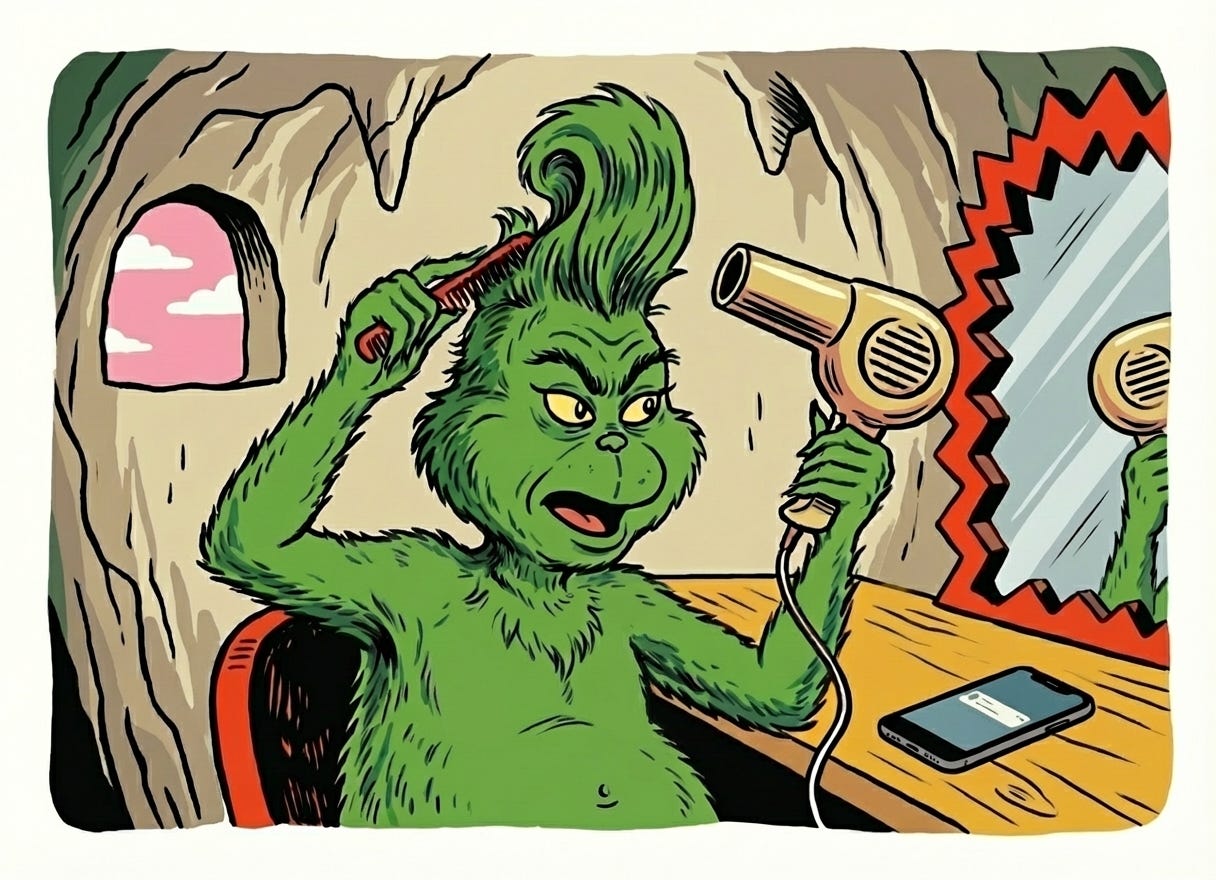
I’m a born hater. But, I like to think of myself as an open-minded hater. I’ll try anything once! But if I don’t like it, I’ll form a strong opinion and be resolute about it. Historically this quick, confident judgment has been a professional asset for me (setting aside whether or not it makes me pleasant to be around, though tbh I think it does). However, I have recently realized it has become a trap for me when it comes to AI tools.
There is a growing list of tools I once vocally opposed that I’ve now come around to. And I don’t think I was wrong to be opposed! But the tools changed, and sometimes they opened up entirely new ways of working I hadn’t considered.
Good judgment has always meant knowing what’s worth your time. But I’m realizing it has a failure mode: when you correctly assess something’s limitations, you stop looking for evidence that you might be wrong. And when those limitations change (which, in AI, they do constantly) your correct assessment is exactly what blinds you. Being right is a trap.
Let me walk you through my recent humiliations.
who has the time to do their hair
While I wasn’t an immediate convert to the “voice as the superior interface for software” train, I did eventually get on it (shout out Wispr Flow), and can now be found wandering around my house talking to my apps at any moment. But even so, until a few days ago, I was a vocal critic of ChatGPT advanced voice mode. My preferred workflow was “voice in, text out,” where I would dictate to whatever tool I was using, it would turn that into text, and then I would read any responses in text on the screen. With Advanced Voice Mode, ChatGPT talks back to you, which I found uncanny. I also found it tedious to use, both because I read much faster than I listen, and because it kept interrupting me. I understood how people might want something like this when driving, but I don’t drive much, so I figured it wasn’t for me.
Then my friend Ben mentioned that he thinks it’s the thing OpenAI is really nailing right now, so I decided to give it another try.
Turns out....it’s amazing now?
I’ve been workshopping a podcast idea, and wanted to think through how it might work. But I also wanted to make my hair look presentable for some calls I had, which takes me a long time because I have a lot of hair and it has a mind of its own. So I turned on Advanced Voice Mode and talked through my podcast idea while doing my hair. And honestly, 10/10 experience. Doing my hair beyond the bare minimum always feels like a bad use of time, so I hardly ever do it, but suddenly I was getting work done at the same time. And not, like, the fake kind of work where you’re actually procrastinating. I don’t think so, at least. I guess we’ll all find out if and when I launch a podcast.
Anyway, as someone who loves to have a cup of coffee in the morning and then yap about whatever harebrained idea I came up with in the shower that morning, this felt both fun and also productive. AND it gave me the time to actually do my hair!!
At the end of the conversation, I asked it to summarize what we discussed in a markdown file that I downloaded to my Personal OS (more on that in the new year), which means I can now reference the ideas I workshopped at any point.
uh oh, I’m noticing a pattern
This keeps happening.
I was a longtime hater of AI-generated slides. My objection: the bottleneck to good slides isn’t *making* them. It’s having a coherent point of view about what you want to say. Skip that step and sure, you have slides, but is that a presentation worth sitting through? Also, I think there is value in making something *look* like you spent time on it, to signal to people that it’s worth *their* time. When I see AI generated slides, I think the person who made them couldn’t be bothered to put the work in.
But I’d heard that the slide generator in Google NotebookLM was *way, way* better than anything that had come before. So I decided to give it a try. I uploaded some rough notes on a deck I need to create, and it made a very good deck indeed. Not perfect, and it’s obvious they need better editing (which they say is coming), but I was kind of shocked. (Ethan Mollick talks about this jump in capability here.
And I hate to admit this next one, because I have been SOOOOO against it. But I’ve come around on AI-generated meeting notes too. I used to say: The act of synthesizing notes is valuable in and of itself! You shouldn’t outsource that thinking!
And I still believe that. But, I learned from friends like Tal and Aman that you can find extremely creative uses for recorded meeting transcripts. You can download them as context into your Personal OS and reference them later, pull out the best ideas from a brainstorming conversation with a friend, or use them to prepare for future meetings.
Until I begrudgingly tried AI notetaker tools, which I REALLY CAN’T STRESS ENOUGH how skeptical I was of these, I didn’t understand this. I thought the tools were replacing some cognitive function I refused to outsource, but they were opening up entirely new ways of working.
good judgment as a trap
The ground shifts every few weeks, faster than you can update your priors. You were right about what some tool could do in September. It’s December now, and you’re still walking around with September’s conclusions. In any other time, that would have been completely reasonable. We have lives!
But now that same instinct is making me miss things. Things that crossed the threshold from “not quite there” to “actually useful” while I was busy being right about how they used to be.
resistance as a signal
So I’ve started doing something that doesn’t come naturally: treating my own strong negative reactions as a signal.
When I notice myself thinking *this isn’t for me*, that’s now a flag. Not to immediately reverse my opinion, but to put it on a list. Come back in 30 days. Try it again. See what’s changed.
This is hard for me. I naturally follow my energy and excitement, not my skepticism. If something sparks interest, I’ll chase it down. If it doesn’t, I move on.
I’ve had to train myself into a different kind of openness. Not just “I’ll try anything once,” but, “I’ll try it now and I’ll try it again later.”
It’s uncomfortable. It means holding my own judgment more loosely. It means a lot of humble returns to things I publicly said weren’t for me.
But it’s also the only way to keep up.
The most expensive opinion in tech right now might be one you formed a month ago. Not because you were bad at evaluating. Because you were good at it, and that confidence made it hard to go back and check.
Several "yep, that's me" moments when reading this post! And subscribed just out of curiosity about your personal OS! 👀
It’s scary how fast things change sometimes. The idea that what you might think in September might be completely invalid by December made me shudder… probably a sign that I need to revisit a lot of my old opinions.