
writing is building now
words can just do things

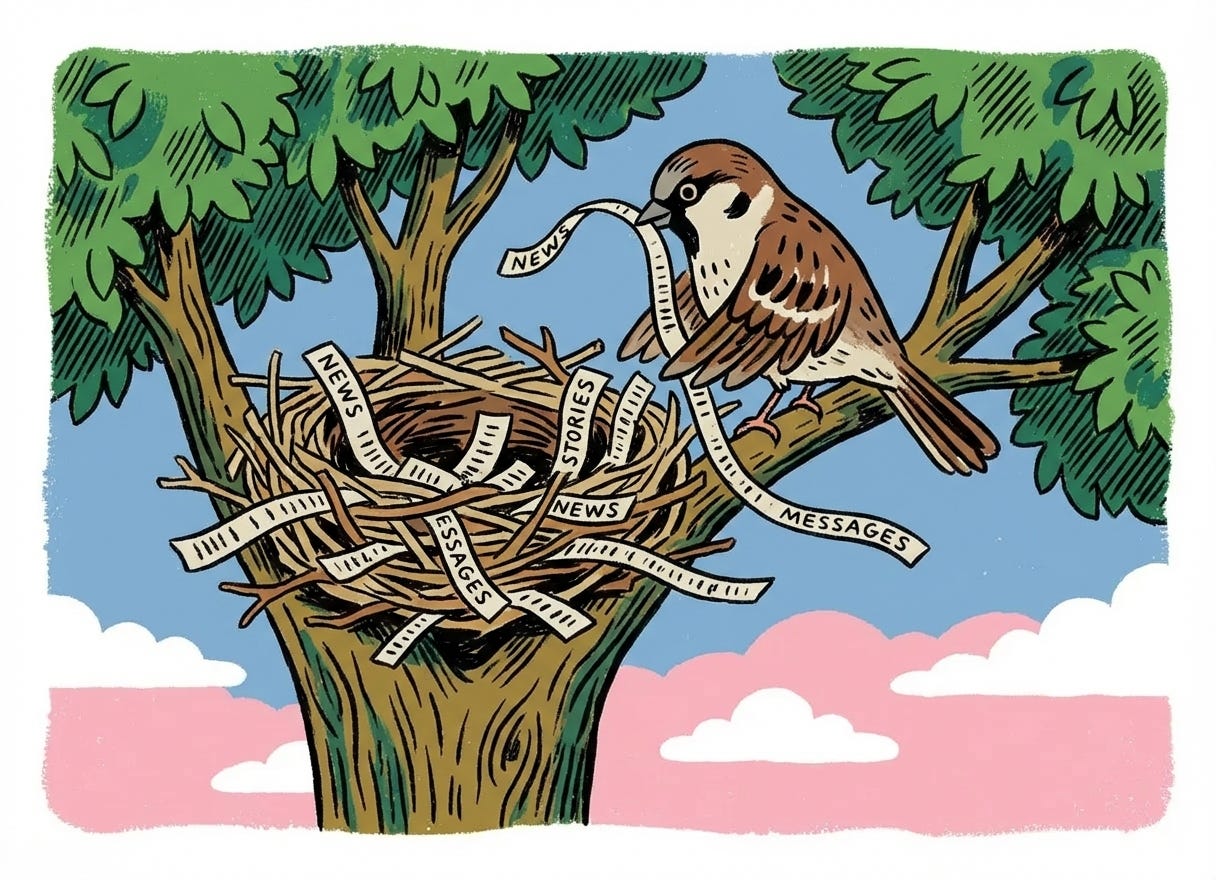
The line between writing and building is dissolving. I’ve been living in that collapse for the past few years, and I think it’s one of the most interesting things happening right now. In fact, I think it’s so cool that I quit my job about it.
Last Monday was my final day at WHOOP. I’ll be writing, building, and teaching full-time now, which I’m thrilled and only a little scared about. I’m relaunching this newsletter as “writerbuilder” to explore this idea in depth.
I’ve loved writing my whole life. And I think this is the most exciting time for the written word in history. I want to explore this intersection deeply: what it means for writing, what it means for building, and what it means for the lives and careers of anyone who works with words and technology.
It’s also a unique moment in my own life. I’m four months into motherhood and figuring out what I want this next chapter to look like. So expect all of that to swirl together going forward, with lots of new tools, demos, learnings, and resources.
Some background: for the past few years, I have been deep in the world of both building AI products used by millions of people and using AI in my work. It has been insanely fun, way more fun than any other work I’ve ever done. Part of this is because AI can help reduce the less fun parts of work, but the fun parts have also gotten more fun. I love writing; building in the age of AI is basically writing; writing feels increasingly like building.
Let me explain what I mean. (Hopefully this will explain why the fears about the death of writing as a craft feel completely misplaced to me.)
A core piece of any AI tool is the system prompt. This is a set of instructions, written in “natural language” (usually English), that tells the system how to behave. For example, an excerpt from Claude’s system prompt:
Claude is happy to write creative content involving fictional characters, but avoids writing content involving real, named public figures. Claude avoids writing persuasive content that attributes fictional quotes to real public figures. Claude can maintain a conversational tone even in cases where it is unable or unwilling to help the person with all or part of their task.
When I make my Custom GPTs, I am writing a system prompt that sits on top of ChatGPT. An example:
You are a collaborative thinking partner that helps users turn unstructured, messy ramblings into clear, persuasive memos, step by step, without rushing. Your goal is not to generate text or copy for the user. Instead, guide the user through a thoughtful, reflective process that sharpens their thinking.
It’s well understood that making a good AI product requires clarity of writing. But I think the power of words goes beyond this. When I started building out my library of Custom GPTs, I got curious about what would happen if I started turning my essays into system prompts. I realized I could make my essays work harder for the people reading them. They could become interactive tools and experiences.
My superpower essay is a good example of this. As a manager, I like to help my direct reports learn how to identify and talk about the things they do uniquely well. Someone asked me how I do this, so I started writing an essay about it. Then I realized that instead of giving people a set of instructions, I could give them a tool that outputs their unique superpower. This required no technical skill whatsoever. I just fed my essay to an LLM, told it what I wanted to build, and asked it to translate my essay into a system prompt. And then my “find your superpower” GPT was born.
I think we are only just scratching the surface of the creative applications for what writing can do in this new age. I’m not naive, and I realize there are plenty of futures that don’t look as rosy as they do in my imagination. So part of my hope is that by sharing my observations and tools freely, I can spark imaginations beyond mine to collectively nudge the future in a direction that supports our most creative minds.
That’s part of why I’m also excited to (publicly, eek) explore what a career as a writerbuilder can look like. I mentioned that I approach building more like a writer now, but I’m likewise approaching writing like a builder. This means a lot of experimentation, putting things out to see what works, what sparks interest and conversation, what falls flat. This is pretty different than how I used to approach writing; I would spend a whole month working on a newsletter, not wanting to put anything out into the world until it was fully formed. Funnily enough, I think my writing was much worse when I did it this way :)
And the experimentation is not simply in words on the page. It’s also around what I want my career to look like as I settle into this new phase in my life. I’ve been influenced greatly by fnnch’s essay on making a living with art, with Elena Verna’s excellent essay on seeking optionality in your career.
(On that note, I’m not planning on charging for the newsletter any time soon, instead aiming to pay my bills through my course on AI for managers and other projects).
(By the way, my course also began as an essay.)
(And while I’m here....if you are upset about em dashes being commandeered by AI writing, I really can’t recommend tangential parentheticals enough!)
Anyway, expect to hear from me more. I’ll be sharing essays, tools, resources, things I’m learning, and whatever else seems useful and interesting. And let me know if you have questions you’d like me to answer or topics you’d like me to explore!
If you’d like to support me in this journey, consider enrolling in my class, or recommending it to a friend. (I’m running an early bird special for 20% off with code EARLY through Jan 16). I’m really proud of the course content; it’s basically everything I’ve learned about using AI thoughtfully in the workplace. If you’re not sure whether it’s “for you,” my How I AI podcast appearance is a good overview of the content and energy I bring to the experience.
Let’s write, let’s build,
Hilary
I listened to your appearance on How I AI and then was so inspired I attended your mini conference on Women in AI in Boston over the summer. I remain inspired and will be following along and reading what you put out. I love your optimism which in turn inspires others to learn - including me!
This resonates SO MUCH with me!
(I also happen to be a huge user of the tangential parenthetical.)
For me, writing (“writing” writing) is about emotion and logic. Writing code uses logic to describe and automate the process to summarize, analyze, describe, visualize data.
AI can integrate both, and more that I’m not thinking about at the moment!