

on copying
generative people will prevail against the copycats. here's how to become one

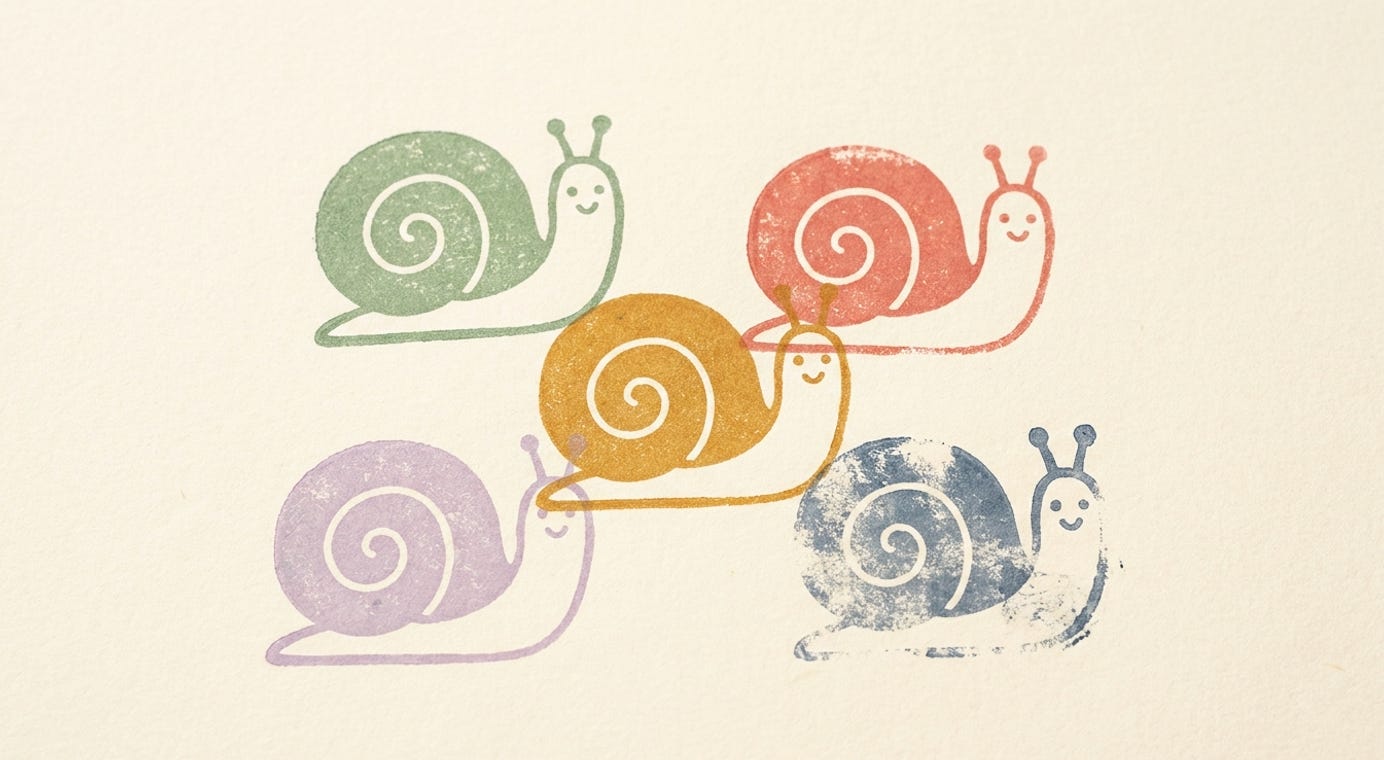
I have a vivid memory of sitting in art class in fourth grade and realizing that the person next to me, unsure of what to draw, had peeked at my work and decided to draw the same thing. She copied me! This struck me as some injustice.
In fact, when I reflect on the times I got mad in my early childhood, I can connect many of them back to this feeling. I took up the saxophone, and my brother decided to take up the trumpet, and man, did that piss me off. Wind instruments were my thing, I guess.
Is this normal? I have no idea. Maybe I am revealing something deeply sinister about myself. I only share it to illustrate that had my life taken a few different turns, I would likely see AI as a threat and enemy, primarily for the ease with which it copies. More than ease, it begs you to copy. Are you spending time doing work like a chump, when you could simply be pointing AI at existing work and asking it to remix it in the shape of you?
There are so many levels at which you can use AI to copy. I can say, “Make me a song in the style of Talking Heads,” and many tools will be happy to oblige. Some tools might politely decline and cite copyright concerns, but they barely put up a fight. Simply ask it to describe a Talking Heads song, and then open a new chat, and ask for a song that meets that description. World crashes in, through your living room.
Of course, the lines on what is “copying” and what is “being inspired” have always been blurry, especially in music. Musicians alternate between suing one another and criticizing their litigious brethren. Nick Cave said, “Theft is the engine of progress, and should be encouraged, even celebrated, provided the stolen idea has been advanced in some way.”
Provided the stolen idea has been advanced in some way.
If you write publicly at all, or really do anything publicly, and your work is any good, you will be copied. It happens to me; I see it happen to other people all the time. Those of us who write about AI find ourselves in a strange space. How can we be mad about people using AI to copy us, when we ourselves are using AI for ... whatever we are using it for?
The more I think about AI, the more I think it both changes everything and changes nothing. Giving credit where it is due still matters a ton. And this distinction -- has the stolen idea been advanced in some way? -- matters, too.
It can be thrilling to see the seeds of your idea through the eyes of someone who approaches their work very differently than you. It is an honor; it validates the work, it means another person has thought about your work possibly as much as you have, and it turns your work into a chain of progress. It is even a thrill being an audience to this -- two creative people in conversation with one another.
The feeling of being “ripped off” is the opposite. When people take your idea without adding new creative thought to it, it can drive you crazy. Seeing people profit from clearly derivative work is extremely triggering to generative people.
And so I understand why today may seem like a particularly bad time to be a generative person. The perceived winner-take-all market dynamics, the ease with which corporations or content farms can rip off your work, and the fact that people with a unique genius for algorithm whispering are so much more visible than those of us who would prefer to spend our time outside the marketing funnel all conspire to make us think creative work is doomed.
But the opposite is true. There has never been a better time to be a generative person.
AI, I am fond of saying, lays bare what is in a person’s head. When people ask how I got so “good” at AI, I tell them I have a rich inner life, and I am only kind of joking.
If you have good ideas and are a clear thinker, AI will act as a jetpack for you. If you have bad ideas, or no ideas, and lack clarity, well, AI will also act as a jetpack, but in the most chaotic sense imaginable.
Just as AI is only as good as its inputs, so too are you. To understand what is in someone’s head, look at what they consume.

Generative people are not starting from scratch. They are pulling references and inspiration from the world around them.
I am often asked for examples of prompts I use to accomplish certain tasks. I am happy to oblige, but I know people will not find the prompts satisfying, because my instructions rely on a lot of references to be useful. While I will gladly share process, and in fact love teaching the process underlying high-quality work, I am more protective of my references.
I am also often asked how to make things, using AI, that do not look or sound like everything else on the internet, for reasons including that “sameness” is often an AI tell. The answer is that you put in a lot of work to curate references to inform your point of view. This is how you develop a vocabulary to steer the AI away from itself.
This is a lot of work. But, importantly, to certain people, it is the most fun thing you could imagine. If that is you -- if there is something you love to go deep on, to get inspiration from -- you are almost certainly undervaluing this skill of yours. The vast, vast majority of people simply do not want to put in the work.
But you cannot make work that is generative -- that advances the work of others rather than derives from it -- if you are not inspired by different references than everyone else.
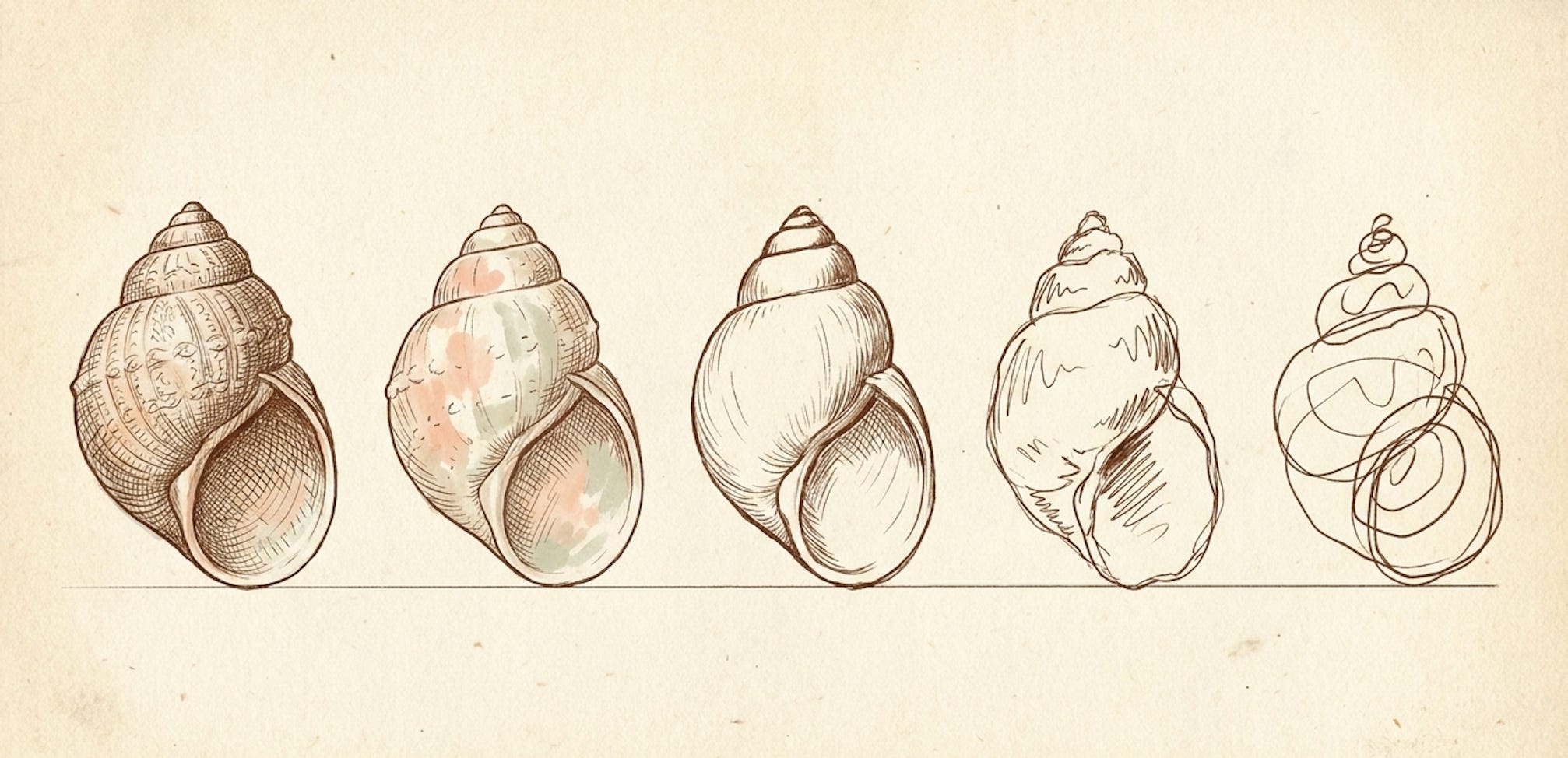
I understand the gatekeeping. You may feel you have some secret weapon — A Dictionary of Color Combinations, or The Visual Display Of Quantitative Information — and then someone posts about it on X, it goes viral, people feed it into Claude to “make it a skill,” and suddenly your advantage is fleeting.
It can feel like influence arbitrage, like you have a closing window to make something of your references before they start trending. You may feel the rush, the pressure to capitalize on it before it closes.
But of course rush is not usually the condition for creative work. Inspiration strikes on walks, in the shower.
When music became widely accessible through Napster and then iTunes, you could no longer flaunt your discerning taste through owning the right albums. Everyone owned all albums. So tastemakers needed a new approach; in economies of abundance, curation becomes scarce and valuable. It’s not a coincidence that mashup artists like Girl Talk and Danger Mouse flourished in 2008. Oh, you like dance music? Can you name 10 artists from different decades with B Sides that share a BPM?
It feels a bit like we are in that era now, but for everything. Whenever a book starts trending, people start tweeting about their “pro tip” to “feed” the book to Claude and ask it to make you a Skill that you can ... do something with? I don’t even know. I do not think this will last, as the mashup era of music didn’t last.
It would be a mistake to let AI simply speed up everything we were doing before, when instead it can help us reshape our time around the type of work that is most enriching. I do not automate tasks so that I can fill that time with more tasks, but instead so I can spend more time getting inspired, finding source material that doesn’t already trend on X every 6 months.
The more everything trends toward sameness, the more valuable a practice of inspiration will become. People might want to hear the same song over and over and over again, but eventually they will tire of it, and want something new. People who can actually make something new will be few and far between.
A practice of inspiration is, emphatically, the only defense against sameness.
If you want to get inspired, where can you start? Well, look to the curators. Find people online who are doing creative work that you admire and who share their sources. Seek out inspiration across disciplines; not just for your chosen field but other fields, too.
Some creators I like who have helped me find inspiration in fields outside my expertise are:
Allison Bornstein for personal style; her Moodboard post rocks as an extremely tactical guide to getting inspired
Grace Spelman and Yasi Salek for music
Jon Klassen and Mac Barnett for picture books
Avery Trufelman for fashion history; her Betty and Veronica post was aimed straight at me
Diana Berlin for the borrowed light of interesting thoughts
But to take this seriously, to become a truly generative person, you will have to dig deeper. You will understand that the work that goes into looking for inspiration is as important as the inspiration itself; the more you want to diverge from the sameness across your feed, the more important it becomes.
What you will notice is that this takes a lot of time, and a lot of that time may feel wasted. But it is not wasted. It is precious, and you should hold it tight.
People might copy something you have created, but they cannot copy the years you spent becoming a person who notices what you notice. That is the part they want and the part they cannot take. You wake up tomorrow with a new good idea, and they do not.
I no longer see being copied as a threat, because the people who copy are not putting in the work. Maybe they are finding success by ripping off actually generative people, but their success has nothing to do with me. Perhaps they have a genius for content manufacturing and for packaging that I do not have. Fine.
The person who takes my work, turns it into prompts, runs those prompts to get work that is shaped like mine -- that, again, has nothing to do with me. They are using my work as inspiration but they are not being inspired in the process, not in any meaningful way.
If I wanted, I could spend more time on the content manufacturing and the packaging and the machine that turns ideas into cold hard cash. At least, that is what I tell my inner child when her lizard brain reaction to being copied starts flaring up.
But, lucky me, I’d rather spend that time on getting inspired.
xoxo,
hils
More writerbuilder
monkey grapes

how to overcome your addiction to comparison, and why seeing your neighbors win the lottery will make you lose your mind


Ahh I feel like this was written for me, Hilary!
I literally wrote a Substack letter a few hours ago in which I talk about how I am torn between using AI to write and not using it at all - which poses a conundrum for me because I teach women how to use AI for their business content marketing.
The idea of being a "generative" person who advances a thought inspired by AI suddenly makes me feel less torn if that makes sense...
"If you have good ideas and are a clear thinker, AI will act as a jetpack for you," yesss - however I'm increasingly worried that we are getting SO lazy that our own good ideas are resigning to AI's good ideas, and clear thinking is blurring into what AI thinks we should think. Under deadlines, I feel this enormously and want to nip it in the bud.
Like you say - 'you have to put in a lot of work to curate references to inform your point of view. This is how you develop a vocabulary to steer the AI away from itself' - and I guess this is what can never be shortcut OR channeled through AI.
I guess the importance of staying inspired, reading widely and gathering varied perspectives to fuel your own thinking - that can then be amplified by AI, is what will outlast what is not.
Thank you for posting this!
How do you feel about using AI in the process of curation? I often feel that “show me how other experts would view this problem” is one of the more powerful value adds of AI, and it feels like it boosts curiosity.