

sea legs
your dreams have a cold start problem

Housekeeping:
GRRLS IN THE LOOP is HEADING WEST!! Anjali and Alexa will be hosting a one-day workshop in San Francisco on June 10. I won’t be there in person, but I worked with them on the content and it is VERY GOOD. If you are curious how to move beyond chatting with AI to really put it to work, grab a ticket.
Maven is running a very rare 25% off special to celebrate the top experts on their platform. Enroll in How to be a Supermanager with AI by Sunday to get 25% off. The July cohort will be fully async; if you have been interested in the course but scheduling has been an issue, now’s your chance. All students get lifetime access to the materials + any future class updates.
I left my job six months ago. It has been a wild and wonderful year. I write, I build, I teach, I hang out with my little family, I meet friends for coffee, I lift weights, I enjoy the sun.
When I left my job, people congratulated me on betting on myself. From the outside, perhaps, it looked like I was taking a risk.
It did not feel like that from the inside.
In fact, it did not even feel like a particularly big move. It felt more like a logical next step after years of learning to bet on myself in small ways as a daily practice.
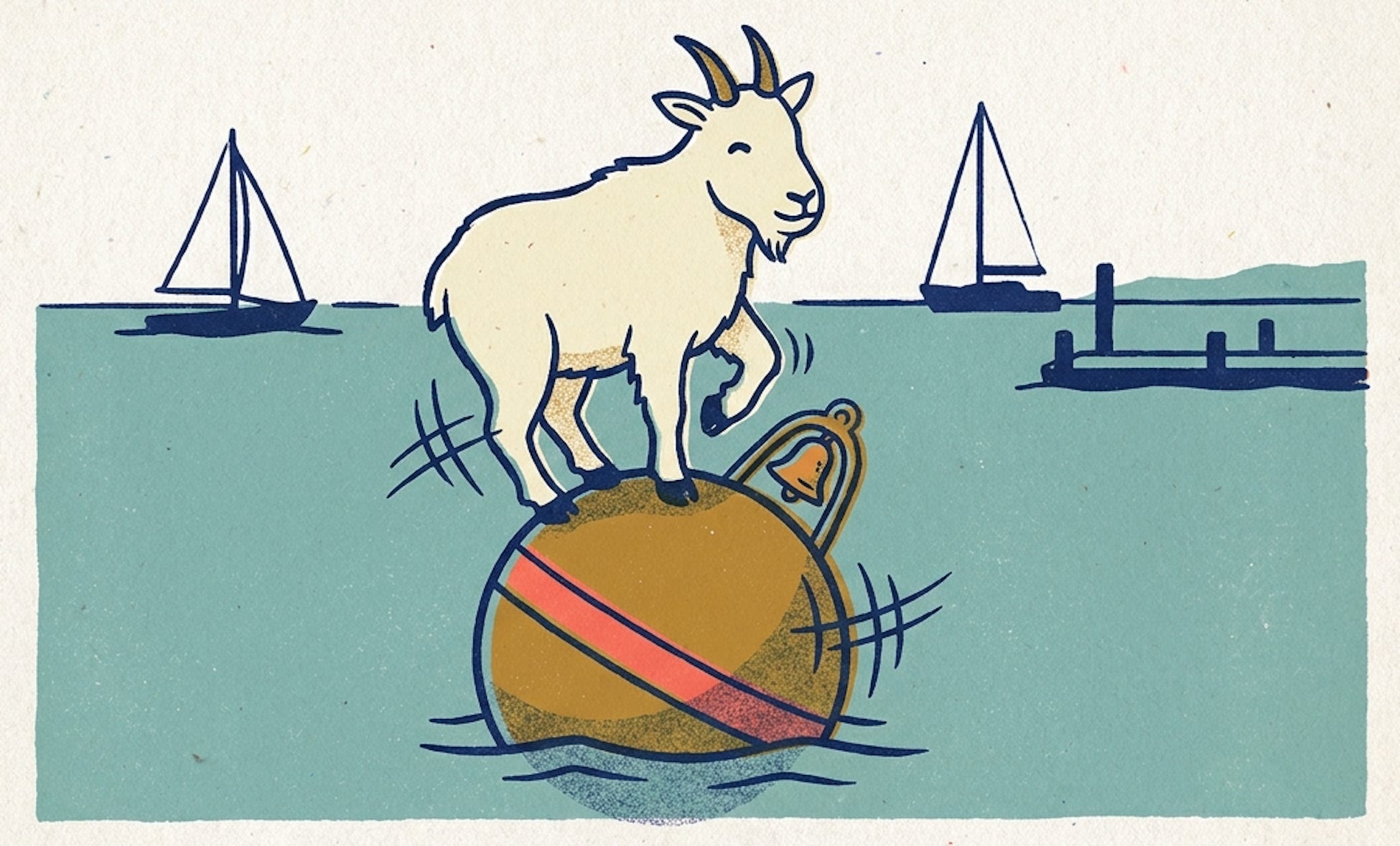
I had developed sea legs long before I went to sea.
Dreams often have a cold start problem. You want to make a change all at once, but big changes are hard, risky, and likely to fail. So you feel stuck, and increasingly agitated, as you feel like the life you have imagined is sailing away without you; trapped on shore, the path to getting on board seems more and more impossible.
When I ask people what is stopping them from betting on themselves, they tell me about a time when they did bet on themselves, and it did not go well. They read this as evidence that they should never bet on themselves again. Worse, they read it as evidence about themselves: if they had been worth betting on, surely it would have worked.
They did not develop sea legs.
This always makes me chuckle a bit, because the bests I have made on myself have, optimistically, a 20% hit rate. And I’m like, hey, that’s pretty good! Plus, I think I am getting better at it.
Getting better is, of course, the whole game. Regularly betting on yourself creates the conditions where betting on yourself works. Like any skill, it takes practice.
When I look back at various swings I’ve taken over the years, I can trace important learnings to each of them, all of which helped me arrive at a place where leaving my job to work for myself seemed like a relatively safe bet.
For example: I first started writing a newsletter in 2018; I started a career resource for English majors in 2019; I started an apparel business in 2020. None of those singularly changed the trajectory of my career the way that writing for Lenny’s Newsletter and teaching a Maven course did, but they taught me critical lessons, including:
Choose collaborators who raise the ceiling of the work by complementing you in interesting ways.
Talk to more people!
Give the people that you want to talk to a compelling reason to talk to you.
Marketing starts before product development, not after.
Don’t use your work computer for personal projects ;)
I still find myself revisiting specific quotes from the English Majors I interviewed for After Words, the career resource.
A former classmate told me he got “lucky” with a connection who got him into a job. I said, “Sure, but you’d done a lot of hard work to get yourself in a place where you could properly take advantage of a lucky break.” He replied:
That’s true. If I had met that guy two years prior, I wouldn’t have gotten the job. A big part of what moved the needle was showing them all the research I’d done in my spare time and for school.
I was once told to think of yourself like a cruise liner: as long as your final destination is far enough away, making a few one-degree turns in the near-term will result in a very large change in direction over the long term. That was true for me.
This is sea legs. This is how you get over your dreams having a cold start problem. It is not an all-in grand gesture. I have flexibility in my career today because I started building the infrastructure needed to have flexibility years ago, before I had any reason to take advantage of it.
The bones of sea legs
Perhaps you are sick of the nautical metaphors (we call that ……. “seasick”) and want me to get to the good stuff. What do I mean by the infrastructure needed to have flexibility? Some of it is tactical, like building an email list. But a lot of it comes down to a set of discrete skills that you can practice.
Clarity
You need some clarity about what you are working toward and what your experiments are meant to teach you. Not because your vision will be right; It almost certainly will not be. But without a direction, reality has nothing to correct.
You need enough conviction to move deliberately, and enough humility to let the movement change your mind. You need to know where you are trying to go so that you can end up somewhere better.
Paul Graham has written well about this:
“So what might seem to be merely the initial step — deciding what to work on — is in a sense the key to the whole game.”
Bet design
In product development, much ink has been spilled over the value of an MVP. Are MVPs dead? Or is the concept still alive, but minimum means something different, as consumer expectations have risen with the glut of world-class product available to us all?
But the core idea remains true, which is: you should derisk the riskiest assumptions that must be true for your product to be successful. How you do this is not straightforward. Learning to think this way about yourself -- how can you try things and learn from them in a way that is focused without narrowing your ambition -- is a difficult skill that takes practice.
Visibility
You have to let people see what you are trying to do, without overcorrecting toward external validation.
There is a painful gap between “I think I might want to be a person who does x” and “other people recognize me as that.” You have to live in that gap for a while. It is embarrassing! It is mortifying to take yourself seriously before you have the track record to back it up.
But there is no other way. People cannot hire you, recommend you, introduce you, collaborate with you, or think of you for opportunities if they do not know what game you are playing. So you do have to call your shots a bit. The rest of us cannot see inside your head. Whatever is hiding in there, get it out, make it visible.
Learning to ask
Asking for things is uncomfortable. Many people avoid it, which means that when they have to do it, they are not good at it. This is another self-defeating cycle: you are bad at asking for things, so your feeble attempts get ignored or dismissed, which lowers your confidence, making you less likely to ask in the future.
If you ask for something -- a meeting, a collaboration, an introduction, whatever -- and get a no or get ignored, ask yourself how you could have approached it differently. Put yourself in their shoes. Maybe it was the way you asked, or what exactly you asked for, or even where you were in your journey when you asked.
A good ask is rarely just “please give me the thing I want.” A good ask makes it easy for the other person to understand what you want, why you are asking them, what the next step is, and what is in it for them. It respects their time. It gives them enough context to help you. It gives them a graceful way to say no.
The act of figuring out what to ask for can itself be clarifying.
Resilience
Hearing “no” is discouraging. One of the reasons to make small bets is that they expose you to rejection at a scale you can metabolize.
I do not mean that you become impervious to rejection because you have a bold vision and a morning routine. I mean that you learn to feel disappointed, embarrassed, annoyed, or ashamed without treating those feelings as evidence that you should retreat.
Small bets on yourself let you practice this. You can be misunderstood and clarify. You can get a polite no and ask someone else. You can flop on LinkedIn and live to post another day.
Environment
You want to surround yourself with people who expand your sense of what is possible.
This is not just because “you are the average of the five people you spend the most time with,” though fine, sure. But your sense of what is reasonable is socially calibrated. The people around you shape what feels possible.
One of the best parts of working for myself and writing publicly is that I now have lots of people who work for themselves and write publicly in my life. And I love them! They are such a joy! They make me feel more ambitious about what my life could be. They help me think through big decisions. The world feels much less zero-sum when I spend my time talking to people who are working to make their own lives big, rather than fighting the guy next to them for a promotion.
Six months into working for myself, I’m still making small bets every day. In some ways, it feels more like “product management” than any product role I’ve had. The more conviction I get about where I’m going, the more possibilities emerge, branching into more paths the further out I look. It can feel overwhelming to think about how to test them all, where to take the product of my own career. But man, is it fun.
xoxo,
hils
More writerbuilder
wean yourself off of external validation

One of the easiest ways to be miserable is to be addicted to external validation. It has a way of warping your sense of self and your decision-making capabilities, tricking you into pursuing things that you know won’t make you happy.

monkey grapes

There is a YouTube video I think about almost every day. Two Capuchin monkeys complete tasks in their cages. When they finish, they receive a cucumber. Life is good.
But then! Paradise lost.
bend problems to your disposition

I don’t find house hunting to be a particularly enjoyable experience, for reasons including: I have no idea what I want.
💚💚💚 This reminds me of one of my favorite quotes from another Paul Graham! This one's a British Photographer. "You will find it, and it will find you, just start, somehow, anyhow, but: start." https://americansuburbx.com/2009/07/theory-paul-graham-photography-is-easy.html
She says to herself as she too launches off to sea...
Hello 👋